
 | 17 Jul 2026
The views of gifted students regarding popular polar phenomena and their information sources
Sinan Yirmibeşoğlu
In this study, we aimed to determine gifted students' views on popular polar phenomena and to investigate the origins of their information sources. We used a case study method involving a total of 27 gifted secondary school students in the fifth, seventh, and eighth grades. We asked 15 open-ended questions to understand the phenomena and examined the data using descriptive analysis. The results of the study revealed that the students were familiar with physical science concepts such as auroras and the midnight sun but had a limited or partial understanding of phenomena related to earth sciences, such as glaciers, permafrost, and polar vortices. The source of information varied depending on the phenomenon: the internet and school lessons were primary sources for auroras, while documentaries and media were primary sources for glaciers and polar vortices. These findings indicate that gifted students' misconceptions and partial knowledge shed light on the need for enhanced curriculum content, practical workshops, and teacher education to strengthen their understanding of polar sciences. Understanding these misconceptions can guide educators in designing educational strategies that foster curiosity and scientific literacy in gifted students, thereby improving science, technology, engineering, and math (STEM) education related to polar phenomena.
- Article
(443 KB) - Full-text XML
- BibTeX
- EndNote


Polar regions (PRs) are sensitive areas of our world, and these regions are of strategic importance (IPCC, 2022). In the past, scientists from many different cultures pioneered polar research in the PRs. These studies can be listed as the discovery and identification of the world's longest coastline and numerous islands in the Arctic Ocean, as well as research on climate changes, ice conditions, water structure and dynamics, and geotectonic and marine biota (Matishov and Dzhenyuk, 2012). The South Polar region has some advantages regarding both solar and terrestrial research and phenomena related to astronomy, including space sciences. These advantages can be listed as having stable atmospheric conditions; continuous observation of objects during long summer and winter nights, such as polar night and polar day, known as midnight sun; and providing unique conditions for observing auroras, distant stars, supernova explosions, and cosmic microwave background radiations. Despite its location and remoteness, the Antarctic region is linked to the rest of the world with its oceanographic dynamics, atmospheric parameters, geopolitical status, and international agreements (Kennicutt et al., 2019). Beyond the strategic importance of the PRs, the glaciers in these regions are rapidly melting as a result of the effects of global climate change. The problems that may be caused by the melting of glaciers as a result of environmental impacts are of global importance (Simsek, 2019; Werner, 2021). In the last decade, the environmental problems in the PRs and the melting process of ice that is not resistant to global warming (Hughes et al., 2018) have warned us to be more careful about anthropogenic effects (Shabudin et al., 2016). Due to the interdisciplinary nature of the PRs and their fragility, it is considered important that future scientists who will engage with polar topics discover their interests and become familiar with this field in the early stages of their educational development.
In foundational studies, gifted and talented children are defined as children who show superior achievement and skills compared to their peers (Gagné, 2004; Marland, 1972; Renzulli, 1978). However, these definitions have changed over time with the addition of various dimensions, terms, and components (Stephens and Karnes, 2000). In describing gifted children, Harrison (1999) refers to children who are at a level significantly beyond their peers, perform in one or more fields, or have the capacity to perform (Harrison, 2004). Another definition made about gifted children is Gagné's definition, which emphasizes the necessity to consider the concepts of giftedness and talented separately. According to Gagné, superiority is defined as having natural talents that are at least 10 % higher than those of their peers in at least one skill area and that arise spontaneously without training. Talent, on the other hand, refers to systematically developed high-level skills that are at least 10 % higher than those of their peers in at least one skill area and are associated with a higher level of knowledge (Gagné, 2004). In the Marland report prepared for the purpose of determining the policies of the government regarding gifted students in the USA, it was stated that the definitions of gifted and giftedness overlapped but serve dissimilar purposes (Marland, 1972). In the literature, many arguments have been suggested on the definition of giftedness and talent, but there is no common definition that all experts agree on. While the disagreements on the definitions continue, it was seen that researchers agree on the characteristics of children with special talents (Robinson and Clinkenbeard, 1998). Joseph Renzulli has provided a generally accepted definition of gifted children. According to Renzulli, giftedness is a phenomenon that occurs with the interaction of three basic features. These features are listed as above-normal general ability, motivation (commitment to tasks), and high creativity (Renzulli, 1978). It is thought that it is necessary for gifted students to get acquainted with different fields of science in order to support the development of these skills.
Brandwein (1955) stated that whatever model is appropriate for identifying young people who contribute to science (or any other field of study) in the future, the key factor in the development of candidate scientists is the teacher. None of the potential or working scientists or mathematicians they observed and interviewed stated that they were willing to pursue their journey without the intervention of the key factor that gave them opportunity and guidance. It is known that there is a significant relationship between learners' interest and prior knowledge (Tobias, 1994). Gifted people need special opportunities to improve their skills in science and mathematics (Fort, 2010). Additionally, Lubinski and Benbow (2006) state that gifted children can demonstrate advanced scientific achievement and high productivity in science, technology, engineering, and math (STEM) fields when provided with appropriate education and opportunities. It is predicted that gifted individuals around the world will have a significant impact on solving problems that may arise in the future. For this reason, it is argued that their development needs to be improved (Wai and Lovett, 2021). Based on these predictions, gifted students are viewed as future scientists. With this research, it was aimed to determine the views of future scientist candidates on phenomena covering various topics in the field of polar sciences, in order to discover their (implicit) interests in this divergent discipline. The basis of this study is the curiosity about how closely they respond to scientific truths and to what extent they have accurate information about the functioning of scientific processes. It is thought that this curiosity regarding the opinions of gifted students will also contribute to the literature.
Polar phenomena are events or conditions that people do not normally see, or see less frequently, in other parts of the world (Alexander and Alexander, 2020). Knowing these phenomena conceptually is thought to emphasize individual interest. It is known from research on students' interests that participation in class increases with increasing attention (Lin et al., 2013). Since it is thought that the interest and participation of gifted students, who are future scientist candidates, in the field of polar sciences will be affected significantly as they learn related concepts, the aim was to examine their level of conceptual knowledge.
2.1 Aurora
The formation of auroras, also known as northern/southern lights, involves highly complex interactions. Auroras are formed as a result of the parts of the field and particle interactions that start in the Sun and reach the Earth. Ions, electrons, and magnetic fields carried by solar winds interact with the magnetic field of the Earth. Auroras are lights that occur because of these interactions (Elphinstone et al., 1996). It is known that auroras are one of the most interesting phenomena of the sky. In the literature, there is a large body of written works on how the formation, interactions, and physical processes of auroras occur. However, this concept has not yet been used frequently in educational literature. It is thought that defining this intriguing concept and determining gifted students' views on how the physical process works will guide scientists and researchers.
2.2 Midnight sun
At 66°33′ North/South latitudes, the sun moves down toward the horizon during a night in the middle of summer but does not cross below the horizon. This phenomenon is called the midnight sun. Far higher than these latitudes, the sun never sets in the summer, and the sun is visible in the sky during summer nights for weeks or months. In the winter months, there are no sunrises at the Arctic/Antarctic circles except for one night, and the winters are quite cold in the more PRs as the sun does not rise for months (Vitebsky, 2015). In a study about the midnight sun in the literature conducted by Vazquez Cano et al. (2019), the difficulties in the lives of teachers, students, and inspectors working under the midnight sun, and the isolation situations that they experienced during the months when there was no sunlight and no darkness (under the influence of the midnight sun), were discussed. In addition, in the publication by Chen et al. (2007), astronomy education – in which the virtual reality application and the Earth motion system were attempted to be understood – involved many observational subjects, which were discussed using the virtual reality application. These issues can be listed as the direction of the Earth's rotation, the length of day and night periods in different countries, and the midnight sun at the PRs. With the upcoming research, such as the present study, it is thought that trying to explain students' views will enrich the literature.
2.3 Permafrost
Permafrost was defined by Muller (1945) as soil or rock ground that remained at 0 °C or lower temperatures for at least 2 years. However, it was stated that this is the minimum permafrost time, assuming that the permafrost is the soil content that freezes in one winter and remains frozen in the next summer and following winter (Brown and Péwé, 1973). While all perennial soils are permafrost, all permafrost may not remain frozen. Permafrost is not considered permanent because the ground temperature rises above 0 °C due to human activities or natural changes. Permafrost includes perennial ground ice but not glaciers or surface water bodies, with temperatures below 0 °C for a long time. The thickness of the permafrost may be less than 1 m or more than 1000 m (Harris et al., 1988). Permafrost covers 2.0×10⁷ km2 of the high-latitude and high-altitude regions of the Earth, which are very sensitive to climate change and human activities. For this reason, the scientific and social importance of permafrost research is remarkable (Bouchard et al., 2018). A survey of 866 questions on PRs was published online by Kennicutt et al. (2014). The purpose of this survey was to identify the questions of priority research to be conducted at the Arctic and Antarctica. Questions published throughout the scientific community were asked to be evaluated within a certain scope. This scope is (a) having an accessible research design, (b) addressing the gaps between information, (c) being handled and evaluated by a good team, (d) having specially formulated research, and (e) having measurable results with impact. When the issues dealt with in this context are examined, two basic questions that are considered to be a priority stand out. The first of these questions is “Will there be release of greenhouse gases stored in Antarctic and Southern Ocean clathrates, sediments, soils, and permafrost as climate changes?” (p. 2), and the second one is “How will permafrost, the active layer and water availability in Antarctic soils and marine sediments change in a warming climate, and what are the effects on ecosystems and biogeochemical cycles?” (p. 3). In the research conducted by Klene et al. (2002), in which teachers and students directly participated in fieldwork, a research group working on permafrost and a glacial environment is emphasized. As part of this research team, together with a teacher and a group of high school scientists, they learned about the North Slope of Alaska. They aided in data analysis by collecting active-layer thickness and temperature measurements. Results from studies of active-layer thickness variability and ground temperature have contributed to international research by making a series of long-term observations on the effects of global climate change. It is thought that determining the conceptual knowledge is important as the first step in understanding the importance of these sensitive areas.
2.4 Glacier
Moving ice masses, which form as a result of the hardening of snow piles that melt little or not at all in a region by losing the air inside due to gravity, are called glaciers (Sarikaya, 2003). Glaciers and ice sheets are large, dynamic reservoirs of water that constantly exchange mass and energy with the atmosphere, hydrosphere, and other parts of the earth system (Benn and Evans, 2020). In the field of early school education, the importance of glaciers is not yet understood. In a study conducted by Schloesser and Gold (2020), they determined the entrance requirements for teachers in polar science and categorized the subjects that these teachers focus on. It has been reported that among the subjects selected at least once, permafrost, glaciers, and ice sheets were the most common. However, glaciers are seen as foremost earth features that attract the attention of scientists, artists, and enthusiasts, in addition to being important for sea level and climate in the future (Interact, 2020). The current importance of glaciers leads gifted students to seek answers to the glacial phenomenon, which is thought to have a valuable place in predicting the future of the climate and sea level.
2.5 Polar vortex
The polar vortex is a strong, mid-latitude, semi-zonal, stratospheric wind system that develops during the winter months in both the Arctic and Antarctica (Schoeberl et al., 1992). The stratosphere, on the other hand, is the atmospheric layer that can reach a height of 50 km from the ground, and it contains mostly ozone (O3) rather than water vapor (Engin, 1989). Low temperatures are required for the formation of polar stratospheric clouds (PSCs) that cause heterogeneous reactions and significant ozone losses. These heterogeneous chemical processes combine the inter-year variability of low stratospheric temperatures with the corresponding variability in ozone. Two variables are used in calculating the polar vortex. These are listed as the maximum wind speed at the vortex boundary and the areal extent of the vortex (Coy et al., 1997). Although the polar vortex is sometimes described as extending from the middle troposphere to the upper stratosphere, there are actually two fairly different polar vortices in the atmosphere of the earth. It is important to acknowledge the existence of a stratospheric and tropospheric polar vortex on a planetary scale. These two vortices have divergent structures, seasonalities, dynamics, and effects on extreme weather conditions. Although extreme weather conditions observed in some regions are associated with temporary displacements at the edge of the tropospheric polar vortex, these events are in no way a manifestation of major changes in the global atmospheric circulation. While the tropospheric polar vortex exists all year round, the stratospheric polar vortex exists only from autumn to spring (Waugh et al., 2017). In the study conducted by Schloesser and Gold (2020), in order to bring polar subjects to the classroom, the knowledge, needs, and requirements of teachers were investigated. It was stated that the concept of the polar vortex was among the topics that teachers want to teach most, together with some climatic events. However, there is no research examining students' cogitation related to this topic in the literature. On the other hand, this finding aroused the students' curiosity on the concept of the polar vortex and led them to examine their views on this concept.
2.6 Importance of research
Communicating scientific concepts is becoming an increasingly important task in the research world (Bouchard et al., 2018). It is the duty of teachers to teach the concepts in line with scientific truths. For this reason, teachers should also be informed about PRs. It is essential that teachers have sufficient background knowledge to increase interest in polar science in terms of conveying polar interest to students. Scientists may not be adequately equipped to convey their knowledge to students. For this reason, it is considered valuable to carry out joint studies in the field of polar science, which is a multi-disciplinary field (Beck et al., 2014). Kennicut et al. (2014) identified the priority questions that need to be addressed urgently in Antarctica and addressed these questions under six main headings, revealing which studies should primarily be conducted. These studies include (a) the global reach of the Antarctic atmosphere and the Southern Ocean; (b) how, where, and why the ice sheets lost mass; (c) the history of Antarctica; (d) how Antarctic life evolved and survived; (e) observations of space and the universe; and (f) the recognition and reduction of human effects. In this study, which emphasizes the need to protect the natural environment, it has been observed that among the priority problems, there are similarities regarding the phenomena that are the main subject of the current research. It is thought that the results obtained from this research will contribute to researchers and teachers in the field of polar sciences in understanding the views of gifted students and to the mission of scientists to support education in the educational dimension of science.
The PRs have an indispensable position in the global processes of our planet, from climate change and sea level rise to UV radiation and CO2 exchange. Scientists have the knowledge to explain these global processes, and when this information is shared with educators, they will gain the confidence to hand over this knowledge to their students. Talented students' perceptions of STEM education are considered important (Mullet et al., 2017). Polar sciences are salient fields of study that can be supported with the STEM approach in education (Beck et al., 2014). Since polar studies cover different research areas in many sciences, such as physical, life, earth, and social sciences, as well as humanities (Skorupa and Szkarłat, 2024; SCAR, 2014), it is fundamental to pique the curiosity of gifted students who are on their way to becoming scientists in the future. In addition, it has been attempted to determine which sources of information they use intensively while learning and researching the concepts in the field of polar sciences. An answer was sought to the question of which sources researchers who will share their knowledge in the field of polar sciences should turn to in order to achieve this change.
Concepts have a crucial role in science education. According to the mental model perspective, concepts are intracranial structures that include structured reasoning patterns (Linder, 1993). Conceptual misconceptions can be defined as misunderstanding by mixing one concept with another, associating it with old concepts in mind. Five types of conceptual misconceptions have been revealed in the study in which ontological examination of conceptual errors was conducted. These are (a) prejudice, (b) unscientific beliefs, (c) conceptual misunderstandings, (d) misunderstandings arising from local use of language, and (e) factual misunderstandings. However, conceptual errors do not arise spontaneously and have four different reasons. These are (a) student-induced reasons, (b) teacher-induced reasons, (c) teaching materials and literature-related reasons, and (d) reasons arising from content and teaching methods (Suprapto, 2020). As we examine the related literature, Ursavaş and Kandemir (2020) had completed research which tried to determine the level of information on and awareness about Antarctica of middle-school students. Participants specified that the coldest region is the North Pole, and the temperature increases from north to south. The authors also stated that participants have conceptual misconceptions about the location of the largest glaciers on earth and a lack of knowledge on polar topics. In the research conducted by Arslan (2019) with gifted students, who are future scientist candidates, it was stated that as they attended training related to the Arctic region, they absorbed the issues and identified different areas in finding scientific research problems. In the study by Dyadik and Chapargina (2019), it was stated that the digitalization of the future will support gifted students in reaching more information. It is thought that gifted students who attain knowledge will gain an advantage in developing their own interests and abilities and will challenge their misconceptions.
There is no equivalent study in the literature on how gifted students perceive some phenomenological concepts in the scope of polar sciences. For this reason, this study aimed to determine how gifted students define a concept, what level of knowledge they have about the mechanism of operation, and what sources they use while learning this information. Due to the nature of phenomenological concepts, which include experiences, the study aimed to identify students who have experience in this field or who have acquired knowledge by making on-site observations. It is expected that the answers of students who have acquired knowledge on site and observed these concepts will differ in the section on the origin of information sources. The awareness of a student who observes a phenomenon on the spot and to what extent their answers differ can be considered another goal.
In this research, the single-case study model, one of the case study designs within qualitative research methods, will be adopted. In case studies, answers are sought for “why” and “how” questions; furthermore, the aim of a single-case study is to examine a complex phenomenon in depth through a single sample, a single group, or a single event (Yin, 2009). The sample for the study was designed using homogeneous sampling, one of the purposive sampling methods. As mentioned in Patton (2002), in homogeneous sampling, diversity is reduced so that a specific subgroup can be examined in depth (as cited in Suri, 2011). In the present study, since the aim was to investigate the views of gifted students on polar phenomena, the sample consisted of gifted students in grades five to eight. These students consist of a total of 27 students: 10 in the fifth grade, 15 in the seventh grade, and 2 in the eighth grade. Since sixth-grade students did not want to participate in the study, they were not included in the study. The research is limited to gifted students only, as it aims to understand their knowledge and interest in phenomena prior to conducting studies in polar sciences.
There is no curriculum content in science education related to the teaching of polar phenomena available in the country where the study was conducted. However, the closest content for the teaching of the following concepts in the units includes astronomy for auroras and the midnight sun for the fifth-grade level: (a) the structure and rotational motion of the Sun. For glaciers, permafrost, and polar vortices, the key concepts of the closest related units are as follows for the eighth-grade level: (b) the rotation axis of the Earth, (c) the plane of rotation, (d) heat energy, (e) seasons, (f) climate, (g) climate science, (h) climate scientist, and (i) global climate changes (MoNE, 2018). It was also seen that other curriculums for the sixth and seventh grades did not include adjacent topics.
3.1 Data collection tools
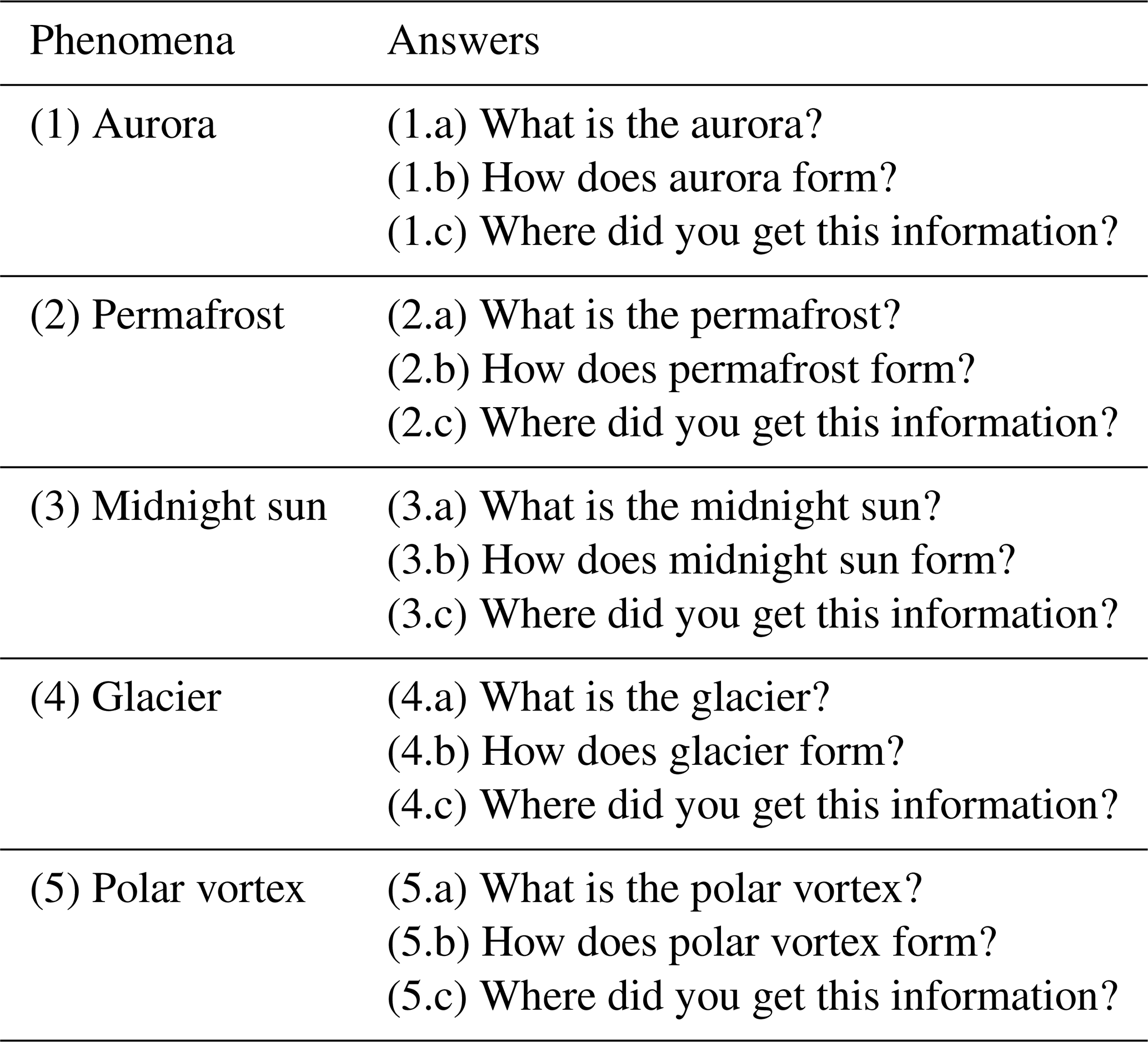
In this study, we used a total of 15 open-ended questions as a data collection tool. The questions were structured around five polar phenomena. For each phenomenon, we asked three sub-questions: two focusing on students' conceptual understanding of the phenomenon and one focusing on their sources of information. These questions were formed as semi-structured questions and were sent to the students as an online questionnaire. All survey questions and anonymized student responses are shared in a publicly available data repository by Arslan and Yirmibeşoğlu (2026). They were asked to respond to the questionnaire without depending on any source and only according to their knowledge available in their memories. Also, their own thoughts or reasoning was accepted. The reason why the semi-structured interview is a popular data collection method is that it is both versatile and flexible. The structure of semi-structured interviews may vary depending on the purpose of the study and the research questions (Kelly, 2010). Data collection tools are structured in order to understand how they define a concept, to what extent they have knowledge about the functioning mechanism of the concept, and through which information channel they acquired a concept. In the present study, if there were phenomena that they experienced, they were expected to share their experiences about them.
3.2 Data analysis
The data obtained from the data collection tools were analyzed by content analysis. This process involves a systematic review phase that transforms raw data into meaningful themes. In the initial stage of data analysis, the students' responses to five different natural phenomena (the northern lights, permafrost, the midnight sun, glaciers, and the polar vortex) were carefully examined, and codes were developed to represent the content of each response. As a key step in this research, the students' responses regarding these phenomena were coded independently by two expert researchers and then compared. The reliability was calculated for each phenomenon separately. The Miles and Huberman (1994) formula was used to determine reliability. At this stage, the formula reliability = consensus/agreement + disagreement was used. The reliability of a study is categorized as good if it has a reliability percentage above 80 % using this formula (Miles and Huberman, 1994). Using this formula, 100 % reliability was calculated for the answers to what the phenomenon is in the cases of aurora, permafrost, midnight sun, and polar vortex phenomena; 100 % for the answers about how the phenomenon occurred; and 100 % for the answers about information sources. In the glacier phenomenon, whilst 94 % reliability was calculated for responses regarding what the event was, 100 % reliability was achieved for responses concerning how it occurred and the sources of information. For codes where no agreement could be reached, the two researchers met again to conduct a “consensus-oriented” assessment. The primary reason cited for the lack of consensus on codes relating to the glacier concept was that the responses were very similar. The two researchers met again to review the responses together, discussed why they could not agree, and ultimately reached a final decision. All of these data could be accepted to be valid and reliable in light of current research.
After data analysis, quotations are used when presenting the findings to the reader. Eldh et al. (2020) argue that the rationale for the criteria used in selecting direct quotations must be clearly stated. The study adopted the principle of “short and readable quotations” from the quotation principles expressed by Creswell (2013). Interesting and short quotations related to each phenomenon were added to the data presentation.
In this section, we present findings in which we examined the opinions of gifted students on selected polar phenomena, as well as the sources of information they use to form these opinions; the results are tabulated and discussed.
Table 1 presents the students' opinions about the aurora phenomenon.
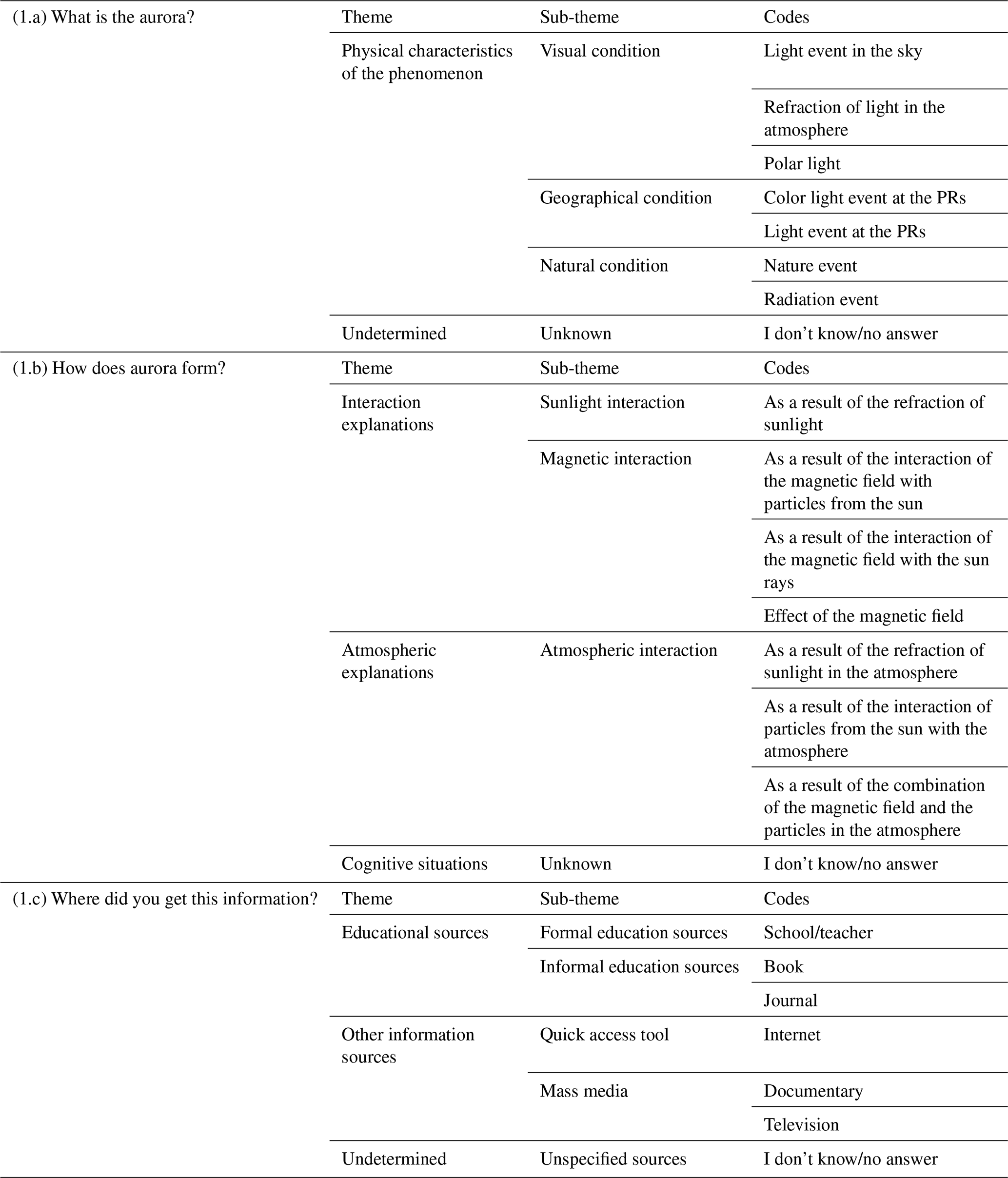
When examining the responses of gifted students about the concept of aurora, we found that approximately half of them had an idea of the phenomenon, although only a few provided scientifically accurate explanations of how auroras form in PRs. For example, one student described the aurora as being “seen in the poles. It is a natural phenomenon that occurs as a result of the interaction of the Earth's magnetic field with the sun's rays”. Another student explained how auroras form: “They are the lights formed by the interaction of the Earth's magnetic field and the particles from the Sun”. These two answers show notable similarity. Regarding the origin of the sources of the information, many students reported using quick-access tools or the Internet to learn about auroras. Accordingly, these findings indicate that gifted students are generally familiar with the phenomenon of auroras. This finding aligns with Çetin (2014), who examined context-based learning using everyday life examples in high school physics lessons. In that study, some students included the aurora phenomenon under the “sky” category, reflecting awareness of the occurrence. Astronomy and space, sky, flying bodies, and mechanics were also reported as the topics that attracted the most interest among high school students. Therefore, the high response frequency and relatively accurate answers regarding the aurora phenomenon in the present study are consistent with the literature.
Table 2 presents the students' opinions about the permafrost phenomenon.
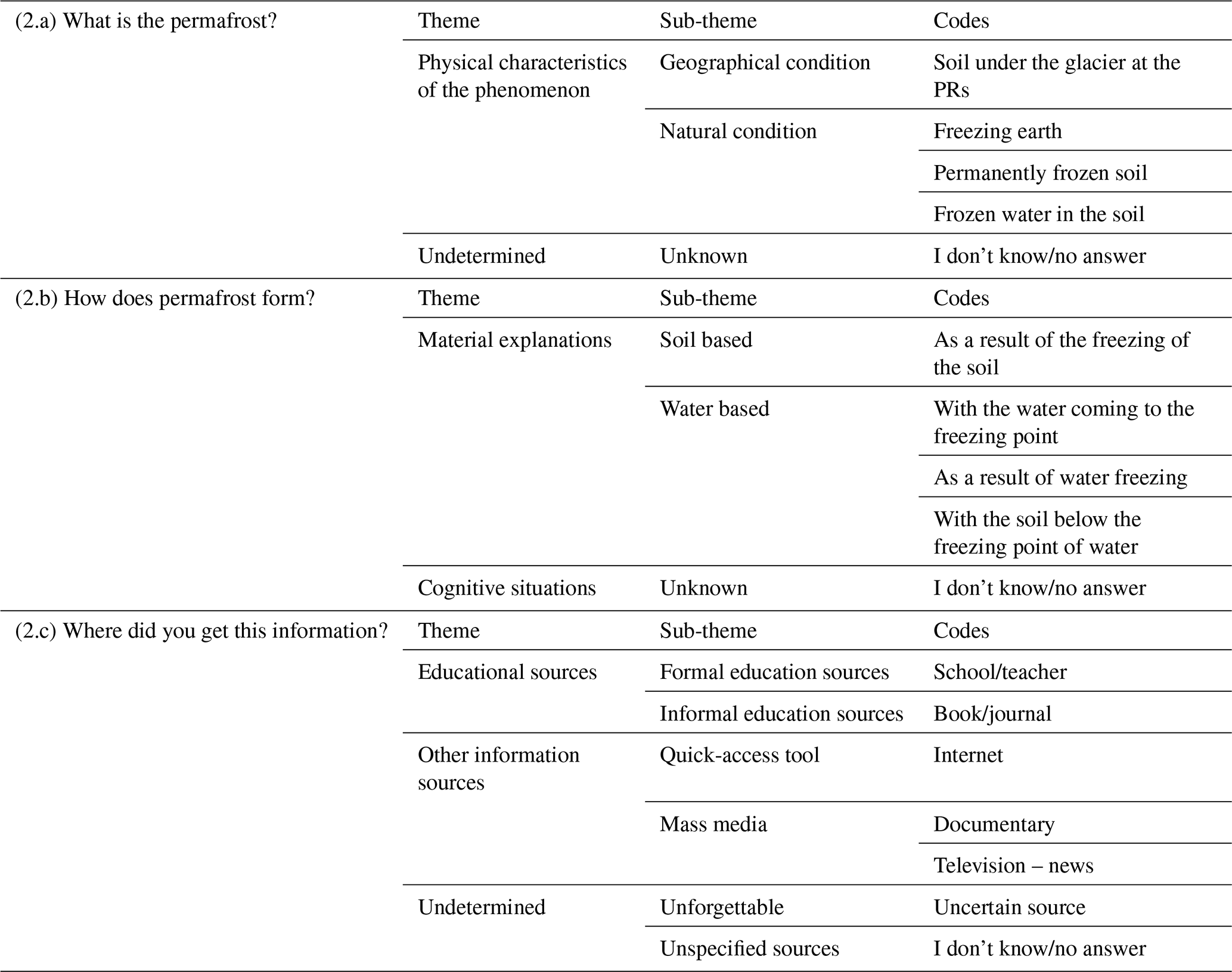
Our results highlight that gifted students often provide simple definitions for the concept of permafrost. This is likely influenced by the connotations of the term, but very few students gave scientifically accurate explanations of how it forms in PRs. For example, one student described permafrost as “Soils below the glacial layer at the polar points”. Another student explained its formation as follows: “It is formed by the freezing of the accumulated water under the soil”. The sources of information that students used to learn about permafrost were different and reflected multiple influences. In addition, the students' understanding of the permafrost phenomenon was also limited, and their explanations often involved incomplete scientific depth. Bouchard et al. (2018) demonstrated that teaching permafrost concepts using cartoons led to positive learning outcomes, with students describing scientists and creatively designing imaginary “permafrost meters” as a drawing exercise. This suggests that practical and creative activities could enhance gifted students' understanding of permafrost, similar to findings in the current study.
Table 3 presents the opinions of gifted students about the midnight sun phenomenon.
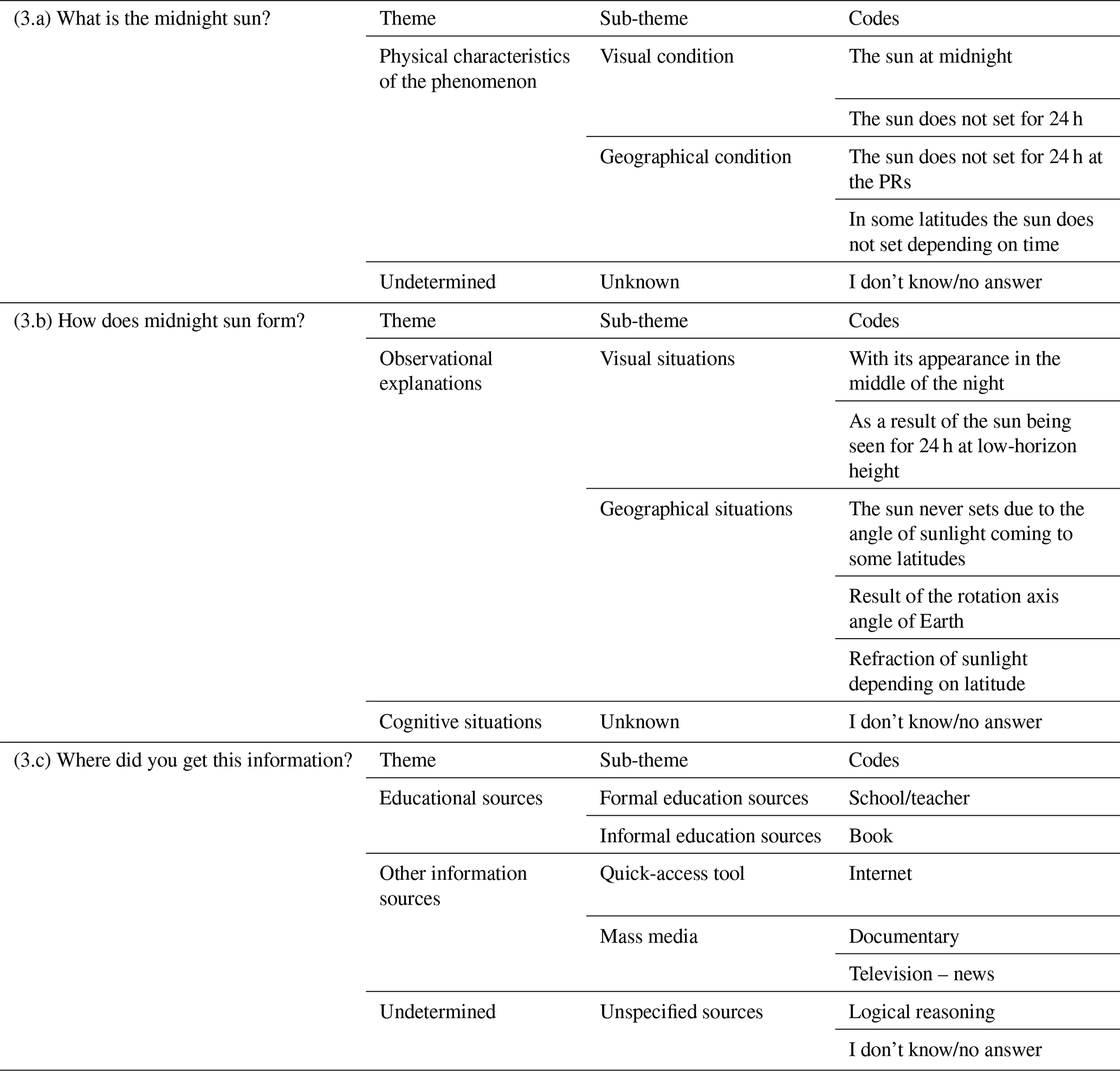
We identified that gifted students provided partially right answers about the midnight sun phenomenon, both in defining what it is and explaining how it occurs in PRs. For example, one of the students described it as follows: “At the extreme latitudes of the poles, the sun is visible for 24 h”. Another student explained its formation as: “When the sun is at the low horizon, it is visible for 24 h.” The students reported using a variety of information sources to learn about the midnight sun, indicating that their knowledge was influenced by multiple channels. Overall, only a tiny group of students could provide replies about this phenomenon. Chen et al. (2007) found that most students did not fully understand the concept of the midnight sun using a desktop virtual reality application in astronomy education. Similarly, Weizinger and Hemmer (2007) noted that central European students required support to comprehend unfamiliar phenomena such as the polar night and the midnight sun. These studies support the present finding that students struggle to visualize and understand phenomena like the sun that never sets.
Table 4 presents the opinions of gifted students regarding the glacier phenomenon.
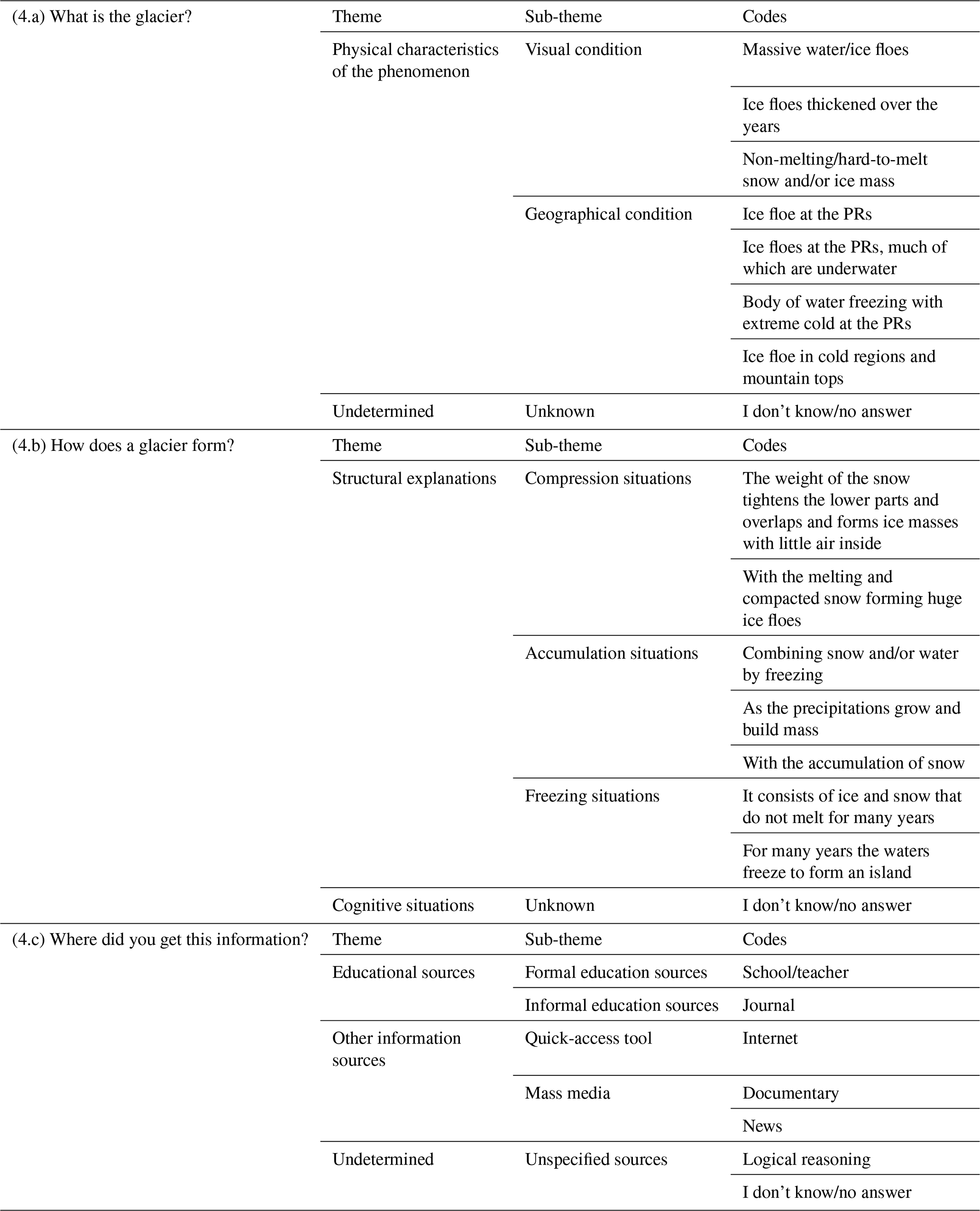
The results indicate that gifted students provided more responses about the glacier phenomenon compared to other concepts. Also, some of their answers were scientifically justifiable. However, their explanations of how glaciers form often lacked in detail and require further technical support. For example, one student defined a glacier as follows: “It is a mass of ice that is mostly underwater, mostly at the poles”. Another student described its formation as follows: “The snow never melts, and after it turns into ice, it becomes massive ice floes”. According to the questionnaire, documentaries were reported as the primary source of information on glaciers. Arrhenius et al. (2020) reported that Swedish middle school students frequently held alternative conceptions about glacier formation, and Ursavaş and Kandemir (2020) similarly found misconceptions among students. The current findings align with these studies, indicating that students' partial knowledge may reflect limited classroom emphasis on glaciers. Schloesser and Gold (2020) reported that glaciers were among the least preferred topics by polar science teachers, and Felzmann (2014, 2017) highlighted the scarcity of conceptual change studies on glaciers. Consequently, limited teacher engagement and access to materials may contribute to students' incomplete understanding of glacier formation.
Table 5 presents the opinions of gifted students regarding the polar vortex phenomenon.
Table 5Responses and percentages regarding the polar vortex phenomenon.
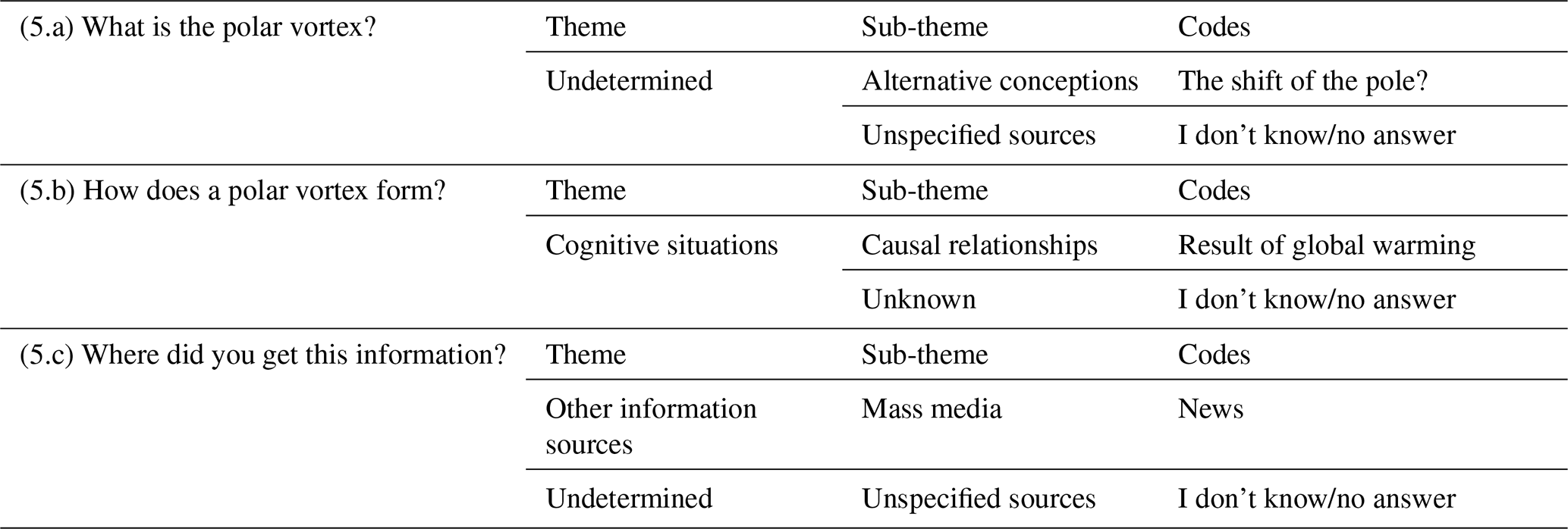
When analyzing the answers of gifted students regarding the polar vortex phenomenon, we observed that only two students provided responses. However, they did not offer a scientifically accurate explanation. One student described the polar vortex as “The displacement of the polar region due to global warming”. The other answered “A vortex of wind”. Regarding the question of how the polar vortex forms, one student answered “Due to global warming”, while the other stated that “It consists of rotating winds”. We find that news articles and magazines were the main sources of information for these two students. Lyons et al. (2018) found links between polar vortex experiences, drought, and climate beliefs, but such relationships could not be explored in the current study due to limited student responses. Bozan and Savas (2019) also identified misconceptions among gifted students in subjects such as heat and temperature, which could negatively affect their understanding of climate-dependent phenomena. This finding is consistent with the present results, highlighting challenges in teaching complex climate phenomena to gifted students.
Overall, gifted students tend to provide answers that approximate scientific knowledge for physical science topics but demonstrate only partial understanding of polar phenomena. Dove (2014) noted similar misconceptions among students regarding the Arctic, and Schloesser and Gold (2020) emphasized that teachers frequently focus on physical sciences in polar education. These findings support the notion that students' responses often reflect school-based instruction rather than independent or in-depth conceptual understanding.
We examined the sources of knowledge that gifted students use to learn about five popular polar phenomena, considering what the phenomena are, how they form, and what the source of their information is. The internet emerged as the most frequently cited source for auroras. Some students reported learning about auroras previously in astronomy lessons, reflecting a combination of school-based and independent learning. For the midnight sun and permafrost phenomena, students cited different sources, while for glaciers, documentaries were the predominant source of information. Responses regarding the polar vortex were primarily influenced by news and journals. Christidou (2011) emphasized that, besides school textbooks, mass media, children's books, and other informal sources significantly impact students' understanding. Similarly, Kaiser (2010) highlighted the value of alternative resources in teaching polar sciences. Spitzer et al. (2026) combined outdoor glacier laboratories with virtual learning environments, illustrating the benefits of experiential and multimedia approaches. The findings of the present study align with these observations, highlighting the role of mass media in familiarizing students with concepts that are not typically addressed in school curricula.
Teachers also play a key role in guiding students' access to accurate information. Integrating polar science concepts into the curriculum could strengthen this influence. In the United States, opportunities exist to develop problem-solving and inquiry-based units on polar themes, helping both teachers and students meet their learning needs in this field (Pfirman et al., 2004). Klene et al. (2002) demonstrated that introducing permafrost scientists to students and local communities effectively raised awareness. Notably, engaging students in fieldwork, emphasizing teacher training, and leveraging online resources emerged as effective strategies in the current study.
Promoting awareness and education in polar sciences can enhance students' understanding and foster a global sense of responsibility toward the Arctic and Antarctica. Developing similar units and experiential learning opportunities in other countries is expected to yield comparable benefits, strengthening students' knowledge and encouraging responsible environmental stewardship.
The present study concluded that gifted students are familiar with concepts in the field of physical sciences and tend to provide scientifically accurate answers, largely because these concepts are taught at school. However, as candidates of future scientists, these students require additional scientific support to deepen their understanding of how current polar phenomena occur. Although students demonstrated some awareness of earth-science-related phenomena, their conceptual understanding remains limited, indicating the need to further develop their scientific reasoning and explanations regarding physical processes.
Examining the origins of students' knowledge revealed that concepts in physical sciences are predominantly addressed in school curricula, resulting in partial familiarity. In contrast, students appear more distant from earth science phenomena, relying primarily on print publications and mass media to obtain information. Furthermore, gifted students generally do not have opportunities to observe polar phenomena firsthand. This lack of direct experience, coupled with limited conceptual knowledge, prevents them from fully understanding climate change and its effects on daily life.
Overall, these findings highlight the importance of engaging gifted students through hands-on, inquiry-driven learning and by incorporating polar science into the curriculum, fostering a deeper understanding of physical and earth science concepts.
It is suggested that practical workshops on climate and weather events, which play a prominent role in daily life, be designed to include concepts that are currently not covered in the curriculum. In addition, these concepts could be integrated into the curriculum as enrichment content tailored to gifted students.
Moreover, it is recommended to strengthen teacher education programs to enable educators to conduct studies that incorporate earth sciences, life sciences, social sciences, and humanities into polar research activities for all students. Scientists' involvement in raising awareness is also crucial for enhancing gifted students' understanding of polar sciences.
Furthermore, these suggestions can be implemented through international science communication and collaboration with polar countries, where polar research and related educational initiatives are frequently conducted. Many countries, such as Germany, Türkiye, and the US, have sent teachers and students to PRs to foster research interest, providing students with the opportunity to learn from experienced and well-informed educators. Such initiatives can help future scientists develop a strong foundation in polar sciences.
Questionnaire items were designed to evaluate students' knowledge of popular polar phenomena (aurora, permafrost, midnight sun, glacier, and polar vortex), focusing on their definitions, formation mechanisms, and sources of information.
The research dataset is available at https://doi.org/10.17632/md6yxv97ts.1 (Arslan and Yirmibeşoğlu, 2026).
Ayşe Arslan designed the methodology section. Sinan Yirmibeşoğlu led the analysis and writing of the paper. Ayşe Arslan collected the data and oversaw the research progress. Sinan Yirmibeşoğlu verified the scientific accuracy of the concepts. Ayşe Arslan and Sinan Yirmibeşoğlu contributed to the interpretation.
The contact author has declared that neither of the authors has any competing interests.
The questionnaire and methodology for this study was approved by the Human Research Ethics committee of Duzce University (ethics approval number: 2020/168).
Informed consent was obtained from all individual participants included in the study.
Publisher's note: Copernicus Publications remains neutral with regard to jurisdictional claims made in the text, published maps, institutional affiliations, or any other geographical representation in this paper. The authors bear the ultimate responsibility for providing appropriate place names. Views expressed in the text are those of the authors and do not necessarily reflect the views of the publisher.
We would like to thank Burcu Özsoy, who inspired this research in the field of polar sciences; Fatih Aydın, for his contribution to the research method; and the Scientific and Technological Research Council of Türkiye (TUBITAK) for the valuable opportunity.
DeepL and Google Translate software were used for a small part of the writing of this article. Generative artificial intelligence was not used in the language and editing sections.
This article was presented as an abstract at the 4th National Polar Sciences Workshop in Türkiye, October 2020.
This paper was edited by Lena Nicola and Rainer Lehmann and reviewed by two anonymous referees.
Alexander, B. and Alexander, C.: Polar phenomena, Arctic Photo, https://www.arcticphoto.com/polar-info/polar-info38.htm (last access: 1 June 2026), 2020.
Arrhenius, M., Lundholm, C., and Bladh, G.: Swedish 12–13-year-old students' conceptions of the causes and processes forming eskers and erratics, J. Geosci. Educ., 69, 43–54, https://doi.org/10.1080/10899995.2020.1820838, 2020.
Arslan, A.: Arktik kutup araştırmalarının özel yetenekli öğrencilerin bilimsel araştırma problemi bulma becerilerine etkisi [The effect of the arctic polar research on the skills of scientific research problems of gifted students], Proc. 3rd Natl. Polar Sci., Ankara, 2019.
Arslan, A. and Yirmibeşoğlu, S.: “Popular Polar Phenomena”, Mendeley Data V1 [data set], https://doi.org/10.17632/md6yxv97ts.1, 2026.
Beck, I., Huffman, L. T., Xavier, J. C. C., and Walton, D. W. H.: Education and polar research: Bringing polar science into the classroom. J. Geol. Resour. Eng., 4, 217–221, https://doi.org/10.17265/2328-2193/2014.04.004, 2014.
Benn, D. I. and Evans, D. J. A.: Snow, ice and climate, glaciers and glaciation, 2nd Edn., https://doi.org/10.4324/9780203785010, 2020.
Bouchard, F., Sansoulet, J., Fritz, M., Malenfant-Lepage, J., Nieuwendam, A., Paquette, M., Rudy, A. C. A., Siewert, M. B., Sjöberg, Y., Tanski, G., Habeck, J. O., and Harbor, J.: “Frozen-Ground Cartoons”: Permafrost comics as an innovative tool for polar outreach, education, and engagement, J. Polar Rec., https://doi.org/10.1017/S0032247418000633, 2018.
Bozan, I. and Savas, B.: Üstün yetenekli öğrencilerde sık görülen kavram yanılgılarının öğretmen görüşlerine göre incelenmesi [Examination of frequent misconceptions in gifted students according to the teacher opinions], J. Interdiscip. Educ. Res., 3, 87–98, 2019.
Brandwein, P. F.: The gifted student as future scientist, New York, Harcourt, 1955.
Brown, R. J. E. and Péwé, T. L.: Distribution of permafrost in North America and its relationship to the environment: A review, 1963–1973. In Permafrost: North American contribution to Second International Conference, (Yakutsk, 1973), P. Natl. Acad. Sci. USA, 71–100, 1973.
Çetin, A.: Bağlam temelli öğrenme ile lise fizik derslerinde kullanılabilecek günlük hayattan konular [Daily Life Subjects That Can Be Used with Context Based Learning in High School Physics Lessons], J. Educ. Sci. Res., 4, 45–62, https://doi.org/10.12973/jesr.2014.41.3, 2014.
Chen, C. H., Yang, J. C., Shen, S., and Jeng, M. C.: A desktop virtual reality earth motion system in astronomy education, J. Educ. Technol. Soc., 10, 289–304, 2007.
Christidou, V.: Interest, attitudes and images related to science: Combining students' voices with the voices of school science, teachers, and popular science, J. Int. Environ. Sci. Educ., 6, 141–159, 2011.
Coy, L., Nash, E. R., and Newman, P. A.: Meteorology of the polar vortex: Spring 1997, J. Geophys. Res. Lett., 24, 2693–2696, https://doi.org/10.1029/97GL52832, 1997.
Creswell, J.: Qualitative inquiry and research design: Choosing among five approaches, 3th Edn., Sage, ISBN: 978-1-4129-3531-3, 2013.
Dove, J.: Exploring students' ideas about the Arctic, Teach. Geogr., 39, 102–105, 2014.
Dyadik, N. and Chapargina, A.: The processes of the formation of a gifted person in distant districts of the arctic: The digital age, Proc. Int. Conf. Digit. Technol. Logist. Infrastruct. (ICDTLI 2019), Atlantis Press, https://doi.org/10.2991/icdtli-19.2019.11, 2019.
Eldh, A. C., Årestedt, L., and Berterö, C.: Quotations in qualitative studies: Reflections on constituents, custom, and purpose, Int. J. Qual. Methods, 19, 1609406920969268, https://doi.org/10.1177/1609406920969268, 2020.
Elphinstone, R. D., Murphree, J. S., and Cogger, L. L.: What is a global auroral substorm?, J. Rev. Geophys., 34, 169–232, https://doi.org/10.1029/96RG00483, 1996.
Engin, N.: Hava kirlenmesi [Air pollution], J. Istanbul Univ. Fac. Econ., 47, 1–4, 1989.
Felzmann, D.: Using metaphorical models for describing glaciers, Int. J. Sci. Educ., 36, 2795–2824, https://doi.org/10.1080/09500693.2014.936328, 2014.
Felzmann, D.: Students' conceptions of glaciers and ice ages: Applying the model of educational reconstruction to improve learning, J. Geosci. Educ., 65, 322–335, https://doi.org/10.5408/16-158.1, 2017.
Fort, D. C.: One legacy of Paul F. Brandwein: The gifted student as future scientist, Springer, https://doi.org/10.1007/978-90-481-2528-9_21, 2010.
Gagné, F.: Transforming gifts into talents: The DMGT as a developmental theory, J. High Abil. Stud., 15, 119–147, 2004.
Harris, S. A., French, H. M., Heginbottom, J. A., Johnston, G. H., Ladanvi, B., Sego, D., and Van Everdingen, R. O.: Glossary of permafrost and related ground-ice terms, Assoc. Comm. Geotech. Res., Natl. Res. Counc. Can. Ottawa, 156, https://doi.org/10.4224/20386561, 1988.
Harrison, C.: Visual representation of the young gifted child, Roeper Review, 21, 189–194, 1999.
Harrison, C.: Giftedness in early childhood: The search for complexity and connection, J. Roeper Rev., 26, 78–84, https://doi.org/10.1080/02783190409554246, 2004.
Hughes, K. A., Constable, A., Frenot, Y., López-Martínez, J., McIvor, E., Njåstad, B., and Xavier, J. C.: Antarctic environmental protection: Strengthening the links between science and governance. J. Environ. Sci. Policy., 83, 86–95, https://doi.org/10.1016/j.envsci.2018.02.006, 2018.
Interact: Images of arctic science, edited by: Rasch, M., Egevang, C., and Topp-Jørgensen, Danish Centre Environ. Energy, Denmark, 182 pp., ISBN: 978-87-93129-16-0, 2020.
IPCC: Cross-Chapter Paper 6, Polar Regions, in: Climate Change 2022: Impacts, Adaptation and Vulnerability. Contribution of Working Group II to the Sixth Assessment Report of the Intergovernmental Panel on Climate Change, edited by: Pörtner, H.-O., Roberts, D. C., Tignor, M., Poloczanska, E., Mintenbeck, K., Alegría, A., Craig, M., Langsdorf, S., Löschke, S., Möller, V., Okem, A., and Rama, B., Camb. Univ. Press, https://www.ipcc.ch/report/ar6/wg2/chapter/ccp6 (last access: 1 June 2026), 2022.
Kaiser, B.: Polar Science and global climate: an international resource for education and outreach, Pearson Educ., ISBN-13 9781849595933, 2010.
Kelly, S. E.: Qualitative interviewing techniques and styles, in: The Sage Handbook of Qualitative Methods in Health Research, edited by: Bourgeault, I., Dingwall, R., and Vries, R., Sage, https://doi.org/10.4135/9781446268247.n17, 2010.
Kennicutt II, M. C., Bromwich, D., Liggett, D., Njåstad, B., Peck, L., Rintoul, S. R., and Cassano, J.: Sustained Antarctic research: A 21st century imperative, J. One Earth, 1, 95–113, https://doi.org/10.1016/j.oneear.2019.08.014, 2014.
Kennicutt II, M. C., Chown, S. L., Cassano, J. J., Liggett, D., Massom, R., Peck, L. S., and Sutherland, W. J.: Supplementary information to: Six priorities for Antarctic science, J. Nature, 512, 23–25, 2019.
Klene, A. E., Nelson, F. E., Nevins, J., Rogers, D., and Shiklomanov, N. I.: Permafrost science and secondary education: direct involvement of teachers and students in field research, J. Geomorphol., 47, 275–287, https://doi.org/10.1016/S0169-555X(02)00093-4, 2002.
Lin, S., H., Hong, R. Z., and Chen, C. Y.: Exploring the development of college students' situational interest in learning science, J. Int. J. Sci. Educ., 35, 2152–2173, https://doi.org/10.1080/09500693.2013.818261, 2013.
Linder, C. J.: A challenge to conceptual change, J. Sci. Educ., 77, 293–300, https://doi.org/10.1002/sce.3730770304, 1993.
Lubinski, D. and Benbow, C. P.: Study of mathematically precocious youth after 35 years: uncovering antecedents for the development of math-science expertise, Persp. Psychol. Sci., 1, 316–345, https://doi.org/10.1111/j.1745-6916.2006.00019.x, 2006.
Lyons, B. A., Hasell, A., and Stroud, N. J.: Enduring extremes? polar vortex, drought, and climate change beliefs, J. Environ. Commun., 12, 876–894, https://doi.org/10.1080/17524032.2018.1520735, 2018.
Marland, S. P.: Education of Gifted and Talent, US Office Educ., Washington D.C., 1972.
Matishov, G. and Dzhenyuk, S.: Arctic challenges and problems of polar science, J. Herald Russ. Acad. Sci., 82, 355–362, https://doi.org/10.1134/s1019331612050073, 2012.
Miles, M. B. and Huberman, A. M.: Qualitative data analysis: An expanded sourcebook, Thousand Oaks CA, Sage, ISBN: 0-8039-4653-8, 1994.
MoNE: Science Curriculum, https://mufredat.meb.gov.tr/Dosyalar/201812312311937-FEN%20B%C4%B0L%C4%B0MLER%C4%B0%20%C3%96%C4%9ERET%C4%B0M%20PROGRAMI2018.pdf (last access: 1 June 2026), 2018.
Muller, S. W.: Permafrost, Or Permanently Frozen Ground and Related Engineering Problems, 62, J. W. Edwards, ISBN 0598538585, 1945.
Mullet, D. R., Kettler, T., and Sabatini, A.: Gifted students' conceptions of their high school STEM education, J. Educ. Gifted, 41, 60–92, https://doi.org/10.1177/0162353217745156, 2017.
Patton, M. Q.: Qualitative Research and Evaluation Methods (3. bs), Sage, ISBN: 0-7619-1971-6, 2002.
Pfirman, S., Bell, R. E., Turrin, M., and Maru, P.: Bridging the poles: Education linked with research, AGUFM, 2004, ED32B-02, 2004.
Renzulli, J. S.: What makes giftedness? Re-examining a definition, J. Phi Delta Kappan, 60, 180–184, 1978.
Robinson, A. and Clinkenbeard, P. R.: Giftedness: An exceptionality examined, J. Annu. Rev. Psychol., 49, 117–139, https://doi.org/10.1146/annurev.psych.49.1.117, 1998.
Sarikaya, M. A.: Buzullar [Glaciers], Mavi Gezegen, edited by: Apaydın, A. and Zimitoğlu, O., 7, 32–35, https://www.jmo.org.tr/resimler/ekler/4ad83a7e67a0997_ek.pdf?dergi=MAV%DD%20GEZEGEN (last access: 1 June 2026), 2003.
SCAR: Science and data, https://www.webarchive.org.uk/wayback/archive/20140611220833/http://www.scar.org/researchgroups/ (last access: 1 June 2026), 2014.
Schloesser, K. A. and Gold, A. U.: Bringing polar topics into the classroom: Teacher knowledge, practices, and needs, J. Geosci. Educ., 1–10, https://doi.org/10.1080/10899995.2020.1729076, 2020.
Schoeberl, M. R., Lait, L. R., Newman, P. A., and Rosenfield, J. E.: The structure of the polar vortex, J. Geophys. Res.-Atmos., 97, 7859–7882, https://doi.org/10.1029/91JD02168, 1992.
Shabudin, A. F. A., Rahim, R. A., and Ng, T. F.: Strengthening scientific literacy on polar regions through education, outreach and communication (EOC), J. Int. Environ. Sci. Educ., 11, 5498–5515, 2016.
Skorupa, A. and Szkarłat, M.: Social relevance of polar research: Part 1, J. Pol. Polar Res., 85–88, https://doi.org/10.24425/ppr.2024.150025, 2024.
Simsek, A. İ.: Uluslararasıtoplumun kutup politikaları: arktik-antarktika karşılaştırması[Polar policies of the international society: the comparison between arctic-antarctic], J. Akdeniz Univ. Fac. Econ. Adm. Sci., 19, 207–237, https://doi.org/10.25294/auiibfd.632974, 2019.
Spitzer, P., Höper, J., Gröger, M., and Heck, V.: Glaciers as classrooms: designing an outdoor lab as a learning space on ice, J. Sci. Commun., 25, N05, https://doi.org/10.22323/165620251230125923, 2026.
Stephens, K. R. and Karnes, F. A.: State definitions for the gifted and talented revisited, J. Except. Child., 66, 219–238, https://doi.org/10.1177/001440290006600206, 2000.
Suprapto, N.: Do we experience misconceptions?: An ontological review of misconceptions in science, J. Stud. Philos. Sci. Educ., 1, 50–55, https://doi.org/10.46627/sipose.v1i2.24, 2020.
Suri, H.: Purposeful sampling in qualitative research synthesis, J. Qual. Res., 11, 63–75, https://doi.org/10.3316/QRJ1102063, 2011.
Tobias, S.: Interest, prior knowledge, and learning, J. Rev. Educ. Res., 64, 37–54, https://doi.org/10.3102/00346543064001037, 1994.
Ursavaş, N. and Kandemir, R.: Determining secondary school students' knowledge and awareness about Antarctica, J. Sci. Learn., 4, 61–68, https://doi.org/10.17509/jsl.v4i1.27537, 2020.
Vazquez Cano, M., Amor, B. H., and Pierson, A.: Educator retention and turnover under the midnight sun: Examining trends and relationships in teacher, principal, and superintendent movement in Alaska, Portland, OR, Education Northwest, Regional Educational Laboratory Northwest, 2019.
Vitebsky, P.: The Arctic as a homeland, http://www.thearctic.is/articles/overviews/homeland/enska/index.htm (last access: 1 June 2026), 2015.
Wai, J. and Lovett, B. J.: Improving gifted talent development can help solve multiple consequential real-world problems, J. Intell., 9, 31, https://doi.org/10.3390/jintelligence9020031, 2021.
Waugh, D. W., Sobel, A. H., and Polvani, L. M.: What is the polar vortex and how does it influence weather?, B. Am. Meteorol. Soc., 98, 37–44, https://doi.org/10.1175/BAMS-D-15-00212.1, 2017.
Weizinger, S. and Hemmer, I.: Students' conceptions on circadian and seasonal cycles, Zeitschrift für Geographiedidaktik (ZGD), 35, 198–206, https://doi.org/10.60511/zgd.v35i4.219, 2007.
Werner, K.: Year of Polar Prediction – enhance observations to provide improved forecasts in polar regions, Polarforschung, 89, 81–84, https://doi.org/10.5194/polf-89-81-2021, 2021.
Yin, R. K.: Case study research: Design and methods, Vol. 5, Sage, ISBN: 978-1-4129-6099-1, 2009.
- Abstract
- Introduction
- Literature on phenomenological concepts
- Method
- Findings
- Discussion on sources of information
- Conclusions
- Suggestions
- Appendix A: Popular polar phenomena questionnaire
- Code and data availability
- Author contributions
- Competing interests
- Ethical statement
- Disclaimer
- Acknowledgements
- Review statement
- References
- Abstract
- Introduction
- Literature on phenomenological concepts
- Method
- Findings
- Discussion on sources of information
- Conclusions
- Suggestions
- Appendix A: Popular polar phenomena questionnaire
- Code and data availability
- Author contributions
- Competing interests
- Ethical statement
- Disclaimer
- Acknowledgements
- Review statement
- References